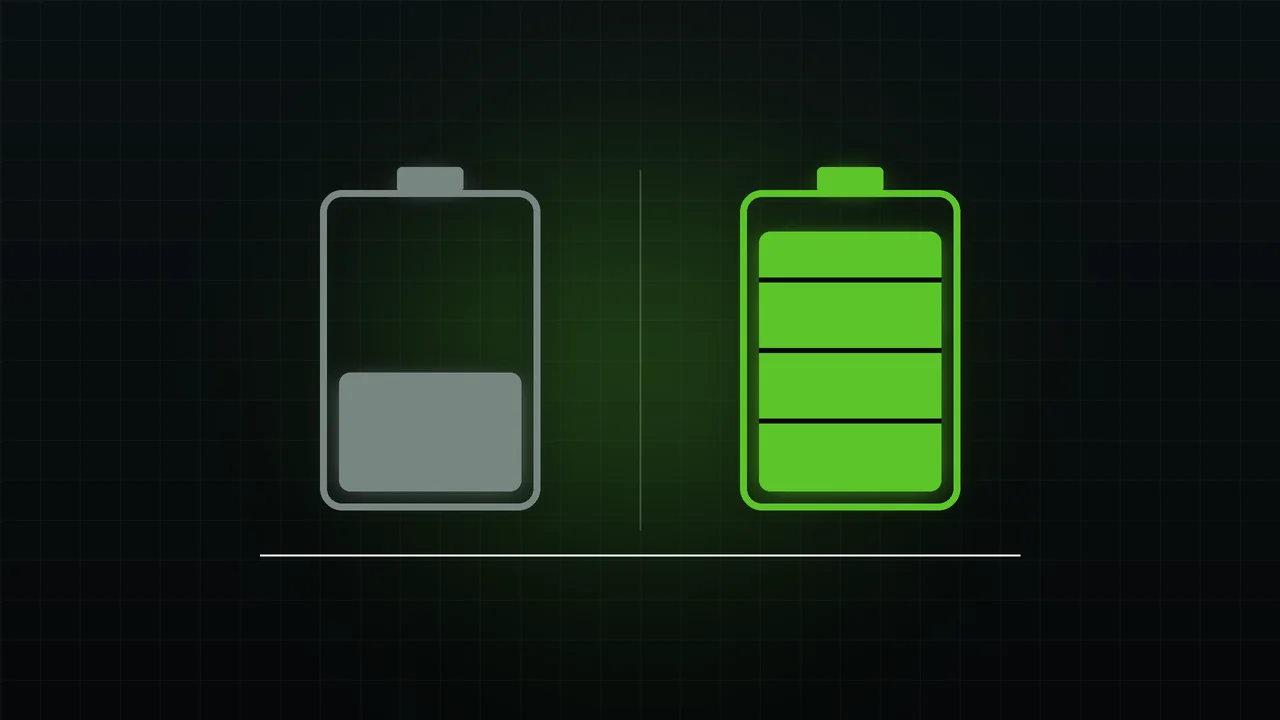
Place two batteries that store the same energy side by side and the difference shows in weight first: LiFePO4 is roughly three times lighter. The real gap, however, is cycle life and usable capacity.
1. Cycle life
LiFePO4 cells can deliver over 5,000 cycles, whereas gel/lead-acid batteries typically last 300–500 cycles.
2. Usable capacity
Deep discharge shortens lead-acid life, so in practice about half the capacity is used. With LiFePO4, 80–100% is usable.
3. Maintenance
LiFePO4 is maintenance-free. A smart BMS protects and balances the cells.
4. Efficiency
Charge efficiency is about 98% for LiFePO4 versus around 80% for lead-acid.
5. Total cost
Although the upfront cost looks higher, the cost per cycle is significantly lower with LiFePO4.
Frequently asked questions on this topic
How much longer does a LiFePO4 battery last than lead-acid?
Under suitable operating conditions LiFePO4 cells can deliver over 5,000 cycles, while gel and lead-acid batteries typically manage 300–500 cycles. Actual life depends on depth of discharge, temperature and charging habits.
Can I swap a lead-acid battery directly for LiFePO4?
In most 12 V applications it is possible if the physical size fits. The charger, alternator or solar controller must support a LiFePO4 charging profile, otherwise the battery may not fully charge or may trip its protection.
Do LiFePO4 batteries work in the cold?
Generally discharging works over a wider temperature range, but charging below 0 °C should be avoided. A good BMS automatically blocks charging at low temperatures.
Why does LiFePO4 look more expensive at first?
The unit price is higher, but once cycle life and usable capacity are considered the cost per cycle drops noticeably. Maintenance and replacement costs also fall.