
A battery management system (BMS) is the “brain” of a battery pack. It continuously measures cell voltage, current and temperature.
Core functions
- Overcharge and over-discharge protection
- Over-current and short-circuit protection
- Over-temperature protection
- Cell balancing
- State of charge (SOC) and state of health (SOH) estimation
Why is cell balancing needed?
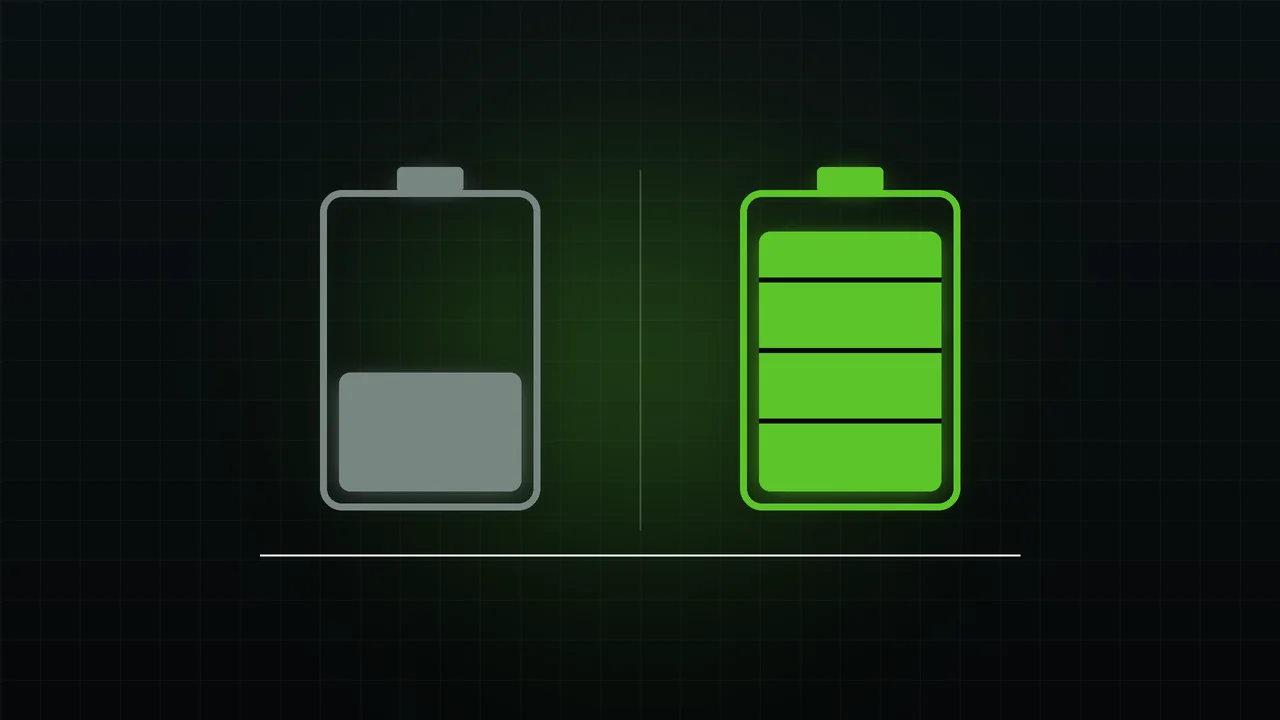
Cells connected in series drift apart in voltage over time. Without balancing, the weakest cell limits the usable capacity of the pack and shortens its life.
Monitoring and communication
Advanced BMS units show voltage, current and temperature in an app or on a display so the system can be followed in real time.
A well-designed BMS directly affects both the safety and the lifespan of the battery.
Frequently asked questions on this topic
Can LiFePO4 cells be used without a BMS?
It is not recommended. Without a BMS protecting against overcharge, over-discharge or over-current, the pack carries a safety risk and its life shortens quickly.
What is cell balancing?
It equalises the voltages of cells connected in series. Passive balancing burns off excess energy as heat, while active balancing moves energy to other cells.
What is a Bluetooth BMS for?
It lets you view cell voltages, current, temperature and state of charge in a phone app, helping you spot problems early and keep track of battery health.
Do I need to consider the BMS when wiring batteries in series or parallel?
Yes. Stay within the series/parallel counts the manufacturer allows and do not exceed the BMS current limit. Batteries wired in parallel should be of the same type, voltage and capacity.