LiFePO4 batteries run trouble-free for years when charged correctly. The key point is that the charger matches a LiFePO4 profile.
The right charging profile
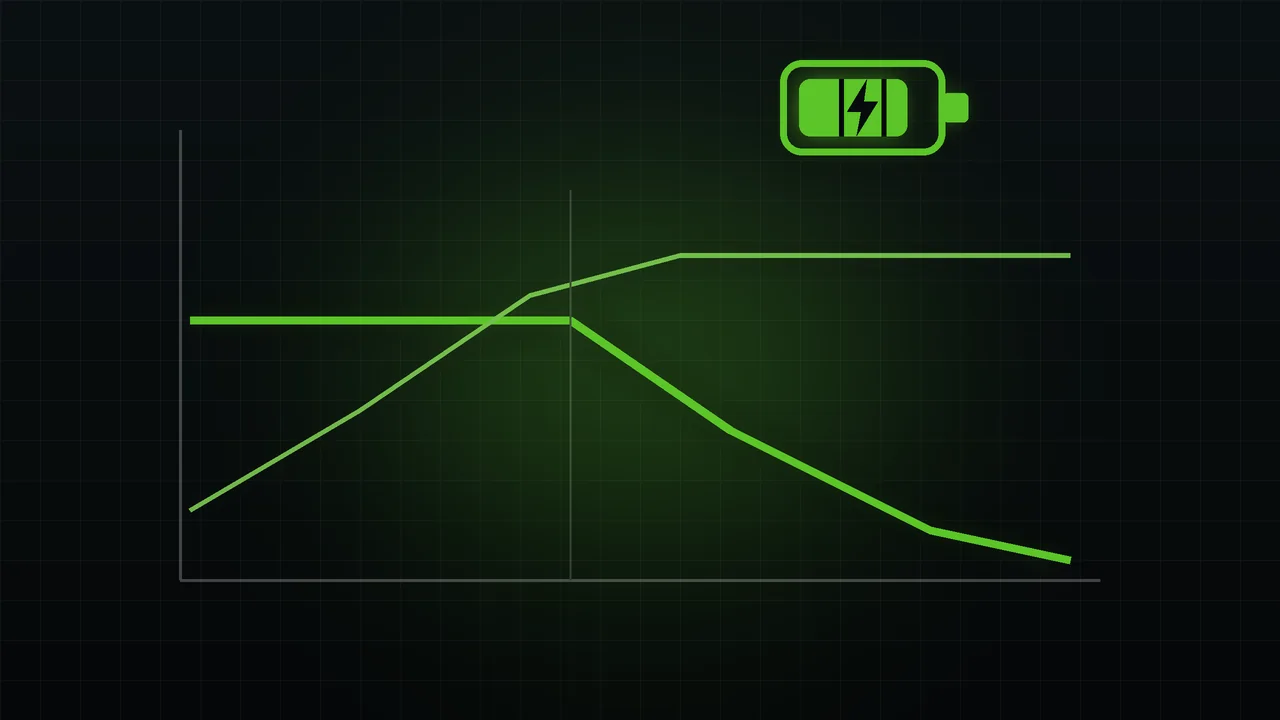
LiFePO4 uses constant current followed by constant voltage (CC-CV). Chargers designed for lead-acid with “maintenance/desulfator” modes may not be suitable.
Charge current
Follow the manufacturer’s recommended charge current. A lower current is generally gentler, while a high current raises temperature.
Charging in cold weather
Charging below 0 °C is not recommended. Warm the battery to room temperature or use a BMS with low-temperature protection.
Long-term storage
If you will not use the battery, leave it about half charged and store it in a cool, dry place. Check the state of charge every few months.
Frequently asked questions on this topic
Is charging a LiFePO4 battery to 100% harmful?
LiFePO4 chemistry is less sensitive to full charge than lead-acid; following the manufacturer’s end-of-charge voltage is enough. Not holding extreme states when unnecessary can still be good for life.
Can I charge LiFePO4 with a lead-acid charger?
Some chargers may work, but desulfation and maintenance modes are not suitable for LiFePO4. Using a charger with a LiFePO4 profile is safer.
How should I store the battery if I will not use it for a long time?
Store it at roughly half charge in a cool, dry place with the terminals disconnected. Check the state of charge every few months.
What if the battery gets warm while charging?
Slight warming is normal, but if it gets excessively hot stop charging and check the charge current and connections. If the BMS has over-temperature protection, charging may be cut off.